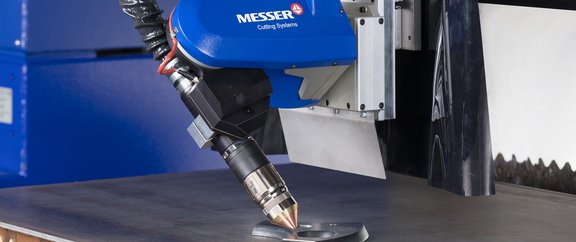
What is High Definition (HD) Plasma Cutting?
High definition plasma is a term that appears frequently in conversations with suppliers and fellow fabricators. Understanding what it means — and whether it represents a genuine advance or simply marketing language — helps in deciding how it fits a particular workshop's requirements.
High definition plasma cutting is a form of precision metal cutting that produces significantly cleaner cuts than ordinary plasma machines. The underlying science is identical; the difference lies in the engineering built around the process. That engineering determines whether a cut edge requires hours of grinding afterwards or almost none at all.
This guide outlines how the technology works, what defines a capable machine, and how to assess whether such a system is necessary for a given operation.
How Does Plasma Cutting Actually Work?
Plasma is gas that has been heated until it conducts electricity. An electric current is passed through the gas, heating it to approximately 20,000 degrees Celsius, and the gas is forced through a narrow nozzle. The result is a jet hot enough to melt steel and forceful enough to expel the molten metal, producing the cut.
Conventional plasma machines rely solely on compressed air for this process. They are well suited to everyday cutting and are used across a large number of small workshops throughout India. However, they carry inherent limitations: edges emerge slightly slanted, thick plates cut slowly, and additional cleanup time is required afterwards.
A high definition plasma cutting machine refines every element of this process through a better power supply, more precise gas control, and tighter motion control. The result is a cut that is cleaner, faster, and considerably more consistent.
What Makes a High Definition Plasma Cutting Machine Different?
Three factors primarily distinguish an HD plasma cutter from a standard unit, each addressed below.
1. How Does the Gas System Improve the Cut?
Air plasma uses air alone, while Oxygen plasma uses Oxygen alone, best suited for cutting to Carbon steel and to some extent in Stainless steel. An HD plasma cutter uses multiple gases (O2, N2, air, H35…), enabling excellent & precise cutting for Carbon steel, stainless steel and Aluminium.
This precise cutting by HD plasma very smooth cutting with minimum dross, narrow kerf, and produce an edge that is almost perfectly square. For precision work, this is a significant advantage.
2. Why Does the Arc Starting Method Matter?
Every high definition plasma cutting machine uses high-frequency arc starting. The arc ignites reliably and remains steady throughout the cut. Arc stability is critical, as any flicker registers as a flaw on the metal. A stable arc ensures every part is identical, with the hundredth piece matching the first.
3. How Much Power Does It Use?
Power is a defining difference. A standard machine typically operates below 200 amps, whereas an HD plasma cutter runs anywhere from 200 to 600 amps, with industrial units rated higher still.
Amperage determines both cutting thickness and speed. At approximately 400 amps, a capable machine cuts through 75mm mild steel without difficulty, a thickness at which a standard unit would fail. For work involving heavy plate, amperage is among the most important specifications to consider.
What Materials and Thicknesses Can You Cut?
The simple answer is any metal that conducts electricity. Mild steel, stainless steel, alloy steel, aluminium, copper and brass all cut beautifully. The metal type is rarely the limit. Thickness is.
Here is a rough guide to what different systems can handle on steel:
System Type | Steel Thickness (approx.) |
Basic air-plasma machine | Upto 12 mm |
oxygen plasma system | Upto 25 to 32 mm |
HD system (200 to 400 amps) | upto 60mm |
Industrial HD system (600+ amps) | 75 mm or thicker |
What Are the Real Benefits of HD Plasma Cutting?
Cleaner Edges
The cut edge is smooth and nearly square, reducing grinding and finishing time substantially.
Faster Work
Higher power enables quicker cutting. Many workshops report cutting 30 to 50 percent faster than with conventional machines, depending on metal and thickness, which translates into greater throughput for a busy job shop.
Consistent Results
With a cnc high definition plasma cutting machine, operator skill ceases to be a variable. A shape is programmed once and repeated precisely throughout the day, so a new operator produces the same quality as the most experienced. This simplifies both training and scaling.
Lower Cost Per Cut
Compared with lasers or waterjets, plasma is economical. Gas is affordable, electricity consumption is reasonable, and consumables are inexpensive.
Do You Really Need a High Definition Plasma Cutting Machine?
For operations primarily cutting thin sheet under 12mm where current edge quality is adequate, a CNC air plasma machine is sufficient, and there is little value in paying for capacity that will not be used.
For cutting in the 15 to 30mm range with a need for better edges short of full industrial cost, mid-range systems (oxygen plasma machines) are appropriate. Machines with plasmas such as the Kjellberg K200/ Hypertherm MaxPro 200 offer high-frequency starting and gas options, positioned between basic and premium tiers.
For operations regularly cutting above 30mm, facing edge-quality complaints, or repeatedly outsourcing cutting, a cnc high definition plasma cutting machine becomes a sound investment. In such cases, the machine often pays for itself within two to three years.
How Do You Choose the Right System?
When choosing a cnc high definition plasma cutting machine across suppliers, several specifications matter more than the sales presentation. The following checklist summarises them.
What to Check | Why It Matters |
Amperage rating | Decides maximum thickness and cutting speed. 200 to 400 amps suits general work; 600+ for heavy industry. |
Cutting speed | Higher speed means more output, but it must be balanced against edge quality. |
Consumable life | Longer tip and electrode life means lower running cost and less downtime. |
Gas flexibility | Multiple gas options let you optimise for different metals and thicknesses. |
Table size | Sets the largest sheet you can cut. Match it to your usual material size. |
Positional accuracy | On a CNC system, this decides how tight a tolerance you can hold. |
A useful rule is to select a system rated for approximately 1.5 times the usual cutting thickness. Investing in slightly more capacity than current requirements demand helps accommodate future growth.
For operations adopting an HD system, beginning with an established manufacturer is advisable. Messer offers proven plasma cutting machines built for clean, accurate cuts across a wide range of metals and thicknesses, providing a useful benchmark for the capabilities of a quality HD system.
The Bottom Line
High definition plasma cutting represents a genuine advance rather than a label. The technology is proven, and the benefits — cleaner edges, faster work, and lower running costs — are real.
Its suitability depends on the individual operation. For those cutting thick plate, requiring sharp edges, or routinely outsourcing work, it merits close consideration. For lighter work, simpler equipment remains appropriate. In either case, a clear understanding of the technology supports a confident purchasing decision.
Frequently Asked Questions (FAQs)
1. Which plasma cutting machine is best for industrial and commercial applications?
For heavy industrial use, a cnc high definition plasma cutting machine rated at 400 amps or more, with gas mixing and a sturdy table, is the safe choice. For general commercial work, a 200 to 400 amp system handles most jobs comfortably. The appropriate selection depends on usual plate thickness and daily part volume.
2. What are the different types of plasma cutting machines?
They run from basic handheld air plasma units, to standard CNC tables, to mid range machines, and finally to premium high definition systems. The differences come down to power, gas control, arc technology and table quality. Each step up gives better edges and the ability to cut thicker metal.
3. Do plasma cutters operate on AC or DC power?
Plasma cutters use DC, that is direct current. DC gives a steadier arc and a cleaner cut than AC would. The machine takes the AC mains supply and converts it to DC inside the power source, so you do not have to do anything special at your end.
4. How do I choose the right plasma cutting machine for my needs?
Start with the thickest metal you cut regularly. Then add up what you currently spend on outside cutting and on finishing work. If those numbers are high and your capacity is holding you back, a higher end machine is worth a serious look. If your work is light, a simpler system is the smarter spend.
5. What size plasma cutter should I buy for the thickness of metal I cut?
A good rule is to choose a machine rated for about 1.5 times your everyday thickness. So if you usually cut 25mm steel, pick a system comfortable with 40mm. This gives you headroom and keeps the machine from running at its limit all day, which helps it last longer.
References and Citations
Surefire CNC. What is high-definition (HD) plasma cutting? 2024.
The Fabricator. Plasma cutting basics and best practices.
Fabricating & Metalworking. Advances in CNC plasma systems.
Canadian Metalworking. Plasma cutting systems for industry.
MetalForming Magazine. Cutting technologies in metal fabrication.
Modern Machine Shop. CNC plasma table performance benchmarking.
Other Popular Solutions by Messer India
Laser Cutting Machines | Plasma Cutting Machine | Flashback Arrestor | Pressure Regulator | Gas Cutting Torch
Contact
Messer Cutting Systems India Private Limited
Sales & Marketing Office:
Office No. A, First Floor, ‘C’ Building, MBC Park, Kasarwadavali, Near Hypercity Mall, Thane West – 400 615
+91 77084 46444
Click to WhatsApp