Introduction: Revolutionizing Fabrication with Plasma Power
Metal doesn’t yield easily, and in heavy-duty fabrication, that’s exactly the challenge. Cutting through thick steel, complex alloys, or large-format plates requires more than just brute force. It demands precision, consistency, and technology built for industrial realities. That’s where plasma cutting comes in. Fast, versatile, and increasingly intelligent, plasma cutting has become the backbone of modern fabrication shops. And with innovative solutions from Messer Cutting Systems, manufacturers now have the tools to take performance, automation, and cut quality to the next level.
Traditionally, mechanical and oxy-fuel cutting methods were the go-to. But these legacy systems are now being overtaken by more advanced, efficient, and flexible technologies. Among them, plasma cutting stands out as a powerful solution, especially when integrated into the intelligent, robust, and highly automated platforms from Messer Cutting Systems.
From entry-level solutions like the AirBlade to high-end systems like the ELEMENT 400, Messer’s lineup of plasma cutting machine offers manufacturers unmatched capabilities. This article explores why plasma cutting is ideal for heavy-duty fabrication, explains how the technology works, and showcases how Messer’s machines are driving the future of metalworking.
What Is Plasma Cutting? A Modern Metal-Cutting Marvel
Plasma cutting is a thermal process that uses an ionized gas, plasma to melt and cut through electrically conductive materials like steel, stainless steel, aluminum, copper, and alloys. The gas is superheated using an electric arc, and this energized plasma stream is directed at high speed toward the workpiece, instantly melting the metal and blowing it away to form a clean cut.
The Plasma Cutting Process at a Glance
- Gas Flow: Inert or semi-inert gases (like air, oxygen, or nitrogen) are introduced into the plasma torch.
- Arc Formation: An electrical arc is generated between the electrode and the metal surface.
- Ionization: The arc ionizes the gas, forming plasma, an extremely hot, electrically conductive state of matter.
- Cutting Action: The plasma arc melts the target area, and the high-velocity gas jet removes the molten metal.
- Torch Movement: CNC systems or manual operation guide the torch along a pre-defined path to complete the cut.
This combination of precision, power, and speed is what makes plasma cutting so effective for heavy-duty industrial applications
How Plasma Cutting Outperforms Traditional Methods
Plasma cuts through thick metals faster than oxy-fuel and more affordably than high-powered lasers. It minimizes downtime, accelerates workflows, and improves shop floor productivity.
For example, Messer’s AirBlade can cut mild steel using compressed air at impressive speeds, while advanced systems like the ELEMENT 400 push the limits of motion control and acceleration for unmatched productivity.
Modern plasma systems particularly those using high-definition (HD) or precision plasma deliver exceptional cut quality with tight tolerances and minimal bevel or dross. They reduce the need for secondary operations like grinding or edge preparation.
Machines like MultiTherm Pro and OmniMat incorporate high-definition torches and sophisticated torch height control to ensure clean, consistent results every time.
Plasma cutting works across a broad range of metals and thicknesses:
- Carbon/mild steel
- Stainless steel
- Aluminum
- Copper and brass
- Nickel and titanium alloys
- Cast iron
Unlike laser cutting, which has limitations on reflective surfaces and very thick materials, plasma easily adapts. The ProfiTherm, Multitherm Pro , Omnimat , ELEMENT 400 machines, for example, is excellent for processing thick plate materials with plasma and oxyfuel in one setup.
Compared to fibre lasers or high-maintenance waterjet systems, plasma offers a balanced combination of affordability and performance:
- Lower equipment cost
- Lower operating expenses
- Cheaper consumables
- Higher throughput = faster ROI
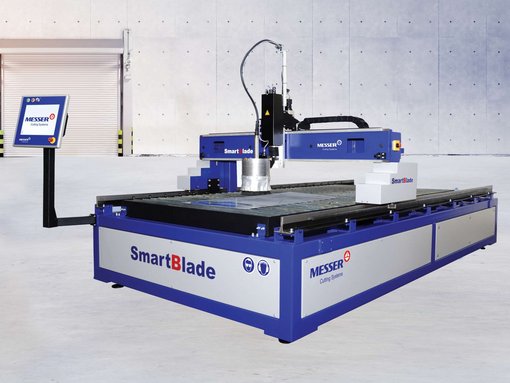
Entry-level systems like the AirBlade and TerraBlade D make it easy for smaller shops to embrace plasma without compromising on performance
Why Messer Cutting Systems Lead the Industry
When it comes to reliable, intelligent, and high-performing plasma cutting systems, Messer Cutting Systems is a global leader. Their wide product lineup spans entry-level air plasma systems to advanced CNC-driven high-definition plasma machines all engineered for heavy-duty, real-world industrial environments. A Messer plasma cutting machine, whether you call it a cnc plasma cutter, cnc plasma cutting machine, or plain plasma machine, delivers that voice back to you, strong, precise, and true.
Let’s explore Messer’s plasma machines from base-level to premium: Messer Plasma Cutting Systems – Lineup Overview
- Technology: Air plasma
- Application: Basic cutting for mild steel, stainless, and aluminum
- Highlights:
- Budget-friendly
- Ideal for small shops or job work
- Simple to use and maintain
Perfect for fabricators needing an affordable, durable, and efficient plasma solution. AirBlade brings plasma cutting into workshops that need value-driven results.
- Technology: Air Plasma + Oxyfuel
- Application: General fabrication, repair, and workshop-level production
- Highlights:
- Heavy-duty construction for tough environments
- Uses compressed air for economical cutting
- Optional oxyfuel torch expands cutting capabilities
- Simple, robust, and easy to maintain
- Ideal for mild steel, aluminum, and stainless in medium thicknesses
TerraBlade D offers the best of both worlds air plasma’s affordability and the extended capability of oxyfuel for thicker materials. It is perfect for workshops needing rugged performance with added process flexibility.
- Technology: Plasma + Oxyfuel
- Application: Plate processing, mixed material thickness
- Highlights:
- Designed for thick plates
- CNC control with height sensing
- Modular table and torch configurations
- Handles plasma and oxyfuel in one setup
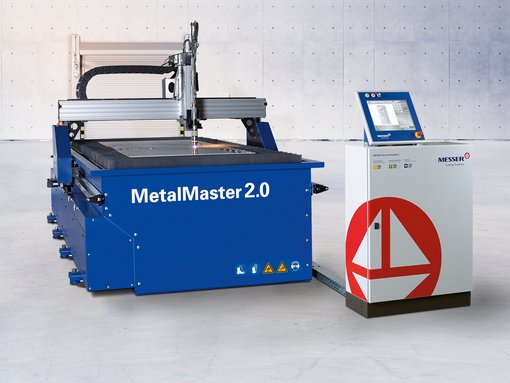
ProfiTherm is purpose-built for workshops handling thick and heavy plates. With its powerful configuration and hybrid cutting technology, it ensures precise cuts across variable material thicknesses and types.
- Technology: Precision Plasma + Oxyfuel + Marking
- Application: Structural, mechanical, and general fabrication
- Highlights:
- Handles multiple torches and bevel heads
- Integrated bevel cutting
- Built for continuous, multi-shift production
- Supports marking, contouring, and multi-process cutting
MultiTherm Pro is a versatile solution for medium to high-volume fabrication environments. It’s engineered for productivity with multi-torch and bevelling options that ensure a complete, automated solution.
- Technology: High-Definition Plasma + Oxyfuel
- Application: Shipbuilding, infrastructure, and heavy equipment
- Highlights:
- Wide gantry for large format cutting
- Long-duty cycle performance
- Supports multi-process heads and bevelling
- Built for oversized components and extended runtime
OmniMat is engineered for large-scale industrial production, handling extensive parts with high precision and power. It thrives in demanding environments like shipyards and construction yards.
- Technology: High-Definition Plasma + Oxyfuel
- Application: Aerospace, automotive, and high-precision industries
- Highlights:
- Ultra-precise plasma cutting with bevelling
- Supports drilling, marking, bevelling, and advanced process automation
- Smart motion control for intricate cuts
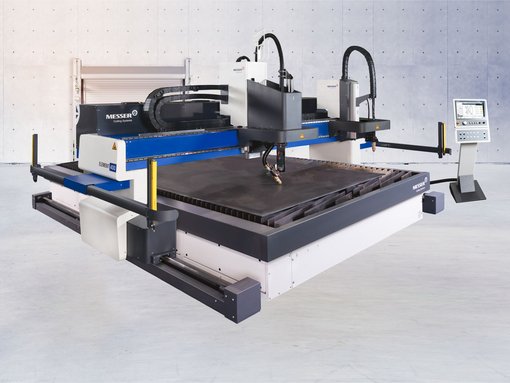
ELEMENT 400 is the pinnacle of Messer's plasma technology, offering unmatched performance for precision-focused industries. It’s ideal for manufacturers looking to automate and scale complex cutting operations with pinpoint accuracy. Anything you need, from plasma to laser to bevel and marking, the cnc plasma cutter handles it.
- Technology: High-definition plasma
- Application: Aerospace, precision engineering, automated production
- Highlights:
- Ultra-high precision cuts
- CNC interface
- Supports bevelling, marking, and drilling
What Sets Messer Systems Apart
Aside from robust hardware, Messer Cutting Systems integrates advanced control platforms and software tools that improve every step of the plasma cutting process
- User-friendly HMI
- Full control of motion, arc parameters, and gas console
- Real-time diagnostics and process feedback
- Advanced nesting, simulation, and bevel path generation
- Maximizes material usage and part precision
- Reduces operator errors and improves programming speed
Messer’s bevel heads support V, Y, K, and X cuts—perfect for weld prep and structural steelwork. Whether using ProfiTherm or ELEMENT 400, the integration of intelligent bevelling dramatically reduces manual grinding or machining.
Real-World Applications of Plasma Cutting in Heavy Industries
- Shipbuilding: Cutting large hull sections, decks, and ribs
- Construction: Structural beams, rebar cages, plates
- Mining & Earthmoving: Loader arms, blade edges, frame parts
- Oil & Gas: Pipe flanges, base plates, support frames
- Energy Sector: Wind turbine components, transmission towers
- Automotive: Chassis parts, mounting brackets, heavy frames
- Railways: Bogie parts, side frames, and undercarriage components
With machines like the OmniMat and MultiTherm Pro, users in these industries gain speed, flexibility, and precision unmatched by traditional methods.
Benefits of Plasma Cutting at a Glance
| Advantage | Impact |
| Fast Cutting Speed | Reduces cycle times and increases productivity |
| Versatile Material Use | Works on most conductive metals |
| High Precision | Reduces the need for rework or finishing |
| Low Operational Cost | Minimizes consumable use and manual labour |
| Easy Automation | Seamless CNC and robotic integration |
| Flexible Deployment | Adaptable to various job sizes and geometries |
Limitations of Plasma Cutting (And How Messer Solves Them)
Plasma can struggle above 100mm thickness. Messer solves this by integrating oxyfuel torches alongside plasma on machines like the MultiTherm Pro or OmniMat
Basic plasma systems may not deliver precise bevels. Messer offers automated bevel heads with smart compensation via Bevel software.
High-end systems require capital. Messer offers scalable systems start with AirBlade or TerraBlade D, then scale up to ELEMENT 400 as business grows.
Conclusion: Plasma Cutting Is the Backbone of Modern Fabrication
Plasma cutting offers unmatched speed, flexibility, and quality—qualities essential to today’s heavy-duty fabrication industry. Whether you’re a growing workshop or an established OEM, the benefits are clear: higher productivity, lower operating costs, and superior output quality.
Backed by the innovation, reliability, and global support of Messer Cutting Systems, plasma cutting is not just an option—it’s a strategic advantage
Other Popular Solutions by Messer India
Laser Cutting Machines | Plasma Cutting Machine | Flashback Arrestor | Pressure Regulator | Gas Cutting Torch
Frequently Asked Questions:
A plasma cutting machine is designed to cut through electrically conductive materials like steel, stainless steel, and aluminum with high precision and speed.
A CNC plasma cutting machine uses computer-controlled movements to guide the plasma torch, ensuring accurate and consistent cuts for both simple and complex designs.
Yes, a CNC plasma cutter is widely used in industries like shipbuilding, automotive, and metal fabrication because it handles thick materials with reliability and precision.
A plasma machine doesn’t rely on physical force like saws or blades. Instead, it uses ionized gas at high temperature, allowing faster, cleaner, and more efficient cutting
The right plasma cutting machine depends on material thickness, production volume, and automation needs, whether you need a basic model or a CNC plasma cutting machine.




Contact
Messer Cutting Systems India Private Limited
Sales & Marketing Office:
Office No. A, First Floor, ‘C’ Building, MBC Park, Kasarwadavali, Near Hypercity Mall, Thane West – 400 615
+91 77084 46444
Click to WhatsApp