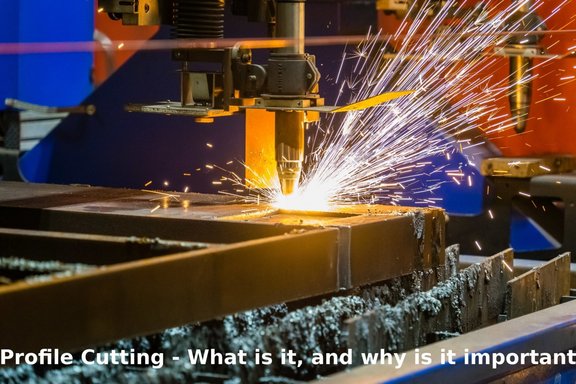
Profile Cutting: What It Is, and Why It Matters
Visualise an iron block; now visualise transforming that block into a shape that meets all design parameters, finished edges, and finish cuts; ready to assemble. Profile cutting is the process of transforming raw materials into specified shapes or profiles, such as raw steel, raw aluminium, raw plate, or raw structural profiles. It uses sophisticated cutting equipment to create flat and structural stock into parts ready for fabrication or construction, precisely following a carefully drawn cutting path.
When you pose "what is profile cutting", think of profile cutting as a step between the raw material and the final product, and that it is done with speed, precision, and repeatability. The workshop provides a design file to the machine, which in turn makes the design using very little material waste, narrow tolerances, and highly consistent quality. This is the essence of profile cutting.
How Profile Cutting Works
Profile cutting involves a CNC-based system. The CNC machine receives a digital drawing and uses the path defined by that drawing to control the machining process and move a cutting head. The machine utilizes different thermal processes, such as oxy-fuel, laser, plasma, etc., depending on both the material being cut and the job itself, to create the desired shape of the cut-out piece or structural component.
Here’s what happens step by step:
- A CAD or CAM design is created, defining the outline, holes, bevels, or cutouts needed.
- The cutting plan is optimized (nesting, tool paths, cut sequences) to reduce waste and maximize material usage.
- The raw material, be it a flat plate or a structural profile, is loaded onto the machine.
- The machine’s cutting head follows the programmed path. The metal is cut by melting, burning, or vaporizing (depending on the method), shaping the piece exactly as per design.
- The result is a ready-to-use part with clean edges and minimal finishing required.
Because it works via computer control and optimized cutting paths, profile cutting delivers consistent results, even for complex shapes, time after time.
Why Profile Cutting Is Important in Modern Fabrication
Efficiency and Speed
Profile cutting speeds up fabrication. Instead of shaping parts manually or using older cutting methods, you get precision output quickly. This is especially useful for large production runs or when many identical parts are required.
Material Waste Reduction
Using smart nesting and efficient cut planning, profile cutting helps ensure minimal scrap. That saves costs, conserves material and contributes to more sustainable operations.
Precision, Consistency, and Fit
Because the machine follows a digital design exactly, every piece comes out the same. Profile cuts provide an accurate and consistent profile that helps create the structural integrity, fit, and also provides guidance to the next stage of fabrication. Profile cuts are used for both flat and structural components with little to no rework.
Flexibility for Complex Shapes and Profiles
Profile cuts are not limited to straight cuts but can also be used to create cutouts, holes, curves, bevels and many more complex contour shapes. This potential allows designers to be creative and think outside the box when designing products, from simple beams to complex architectural components.
Cost-Effectiveness for Fabricators
With faster processing, reduced waste, and less manual labour, profile cutting often brings down overall fabrication costs. For fabricators, that means more competitive pricing and better margins.
Where Profile Cutting Finds Its Best Uses
Profile cutting plays a key role in many industries and applications, including:
- Structural steel fabrication: Cutting beams, channels, angles, and plates to precise dimensions for building frames or industrial structures.
- Shipbuilding and heavy-engineering: When large, complex components must be cut accurately from thick plates or profiles.
- Construction and infrastructure: Fabricating steel profiles with exact dimensions, ready for assembly on site.
- Manufacturing of custom parts, machinery components, or metal fabrications needing detailed cutouts, curves, holes, or customized profiles.
Wherever precision, speed, and repeatable quality matter, profile cutting becomes a go-to process.
What Makes Good Profile Cutting: The Right Approach Matters
Not all profile cutting is equal. For best results, these elements make a real difference:
- Smart CAD/CAM planning and nesting to reduce scrap and optimize material yield.
- Use of suitable cutting technology, matching material type and thickness to laser, plasma, or oxy-fuel systems.
- Reliable CNC control for consistent, accurate cuts, even in large or complex batches.
- Well-maintained machines and skilled operators to ensure clean cut quality, proper bevels or holes, and minimal post-processing.
When these are in place, profile cutting delivers its full promise, making fabrication faster, cleaner, and more cost-effective.
Profile Cutting and Messer: A Great Match
At Messer Cutting Systems, we understand that metal fabrication is rarely one-size-fits-all. That is why our solutions span laser cutting, plasma cutting, oxy-fuel, and full-profile cutting systems.
Whether the job calls for flat plate cutting, structural profiles, custom shapes, or heavy-duty construction parts, profile cutting technology from Messer gives you the flexibility and precision needed to get the job done right. With decades of experience and global reach, Messer provides not just cutting machines but total solutions for fabricators and manufacturing setups.
Final Thoughts
If you ask “what is profile cutting?”, it’s more than just cutting metal. It’s about turning raw material into ready-to-use pieces, precisely, efficiently, and consistently. Profile cutting, bridge design, and reality in metalworking. By choosing profile cutting for your fabrication needs, you access the most significant benefits of contemporary machining technologies: clean cutting, reduced waste, increased production, and a broad range of shapes.
Whether you are building structural frames, manufacturing machine components, or shaping custom metalwork, profile cutting helps you build with confidence.
In a world where precision and speed define success, profile cutting stands out. And when it’s backed by the experience and global technology of Messer, it becomes the backbone of smart, high-quality fabrication.
Citations
https://www.otimizenesting.com/post/2016/09/14/definition-of-what-is-profile-cutting
https://www.daysteel.co.uk/news/maximising-material-efficiency-in-profile-cutting/
https://centurionprofilecutting.co.za/why-consider-profile-cutting-services/
Frequently Asked Questions
1. What is profile cutting in metal fabrication?
Profile cutting is the process of cutting metal plates or structural profiles into specific shapes based on a digital design or cutting profile.
2. Why is profile cutting important in manufacturing?
Profile cutting ensures accuracy, repeatability, faster production, and reduced material waste, making fabrication more efficient and cost-effective.
3. What materials can be used in profile cutting?
Profile cutting is commonly used on mild steel, stainless steel, aluminum, and other metals in plate or structural profile form.
4. How does cutting profile technology improve precision?
Cutting profile systems follow CNC-controlled paths, ensuring consistent shapes, clean edges, and tight tolerances across repeated jobs.
5. Where is profile cutting commonly used?
Profile cutting is widely used in construction, structural steel fabrication, shipbuilding, heavy engineering, and custom metal manufacturing.
Other Popular Solutions by Messer India
Laser Cutting Machines | Plasma Cutting Machine | Flashback Arrestor | Pressure Regulator | Gas Cutting Torch
Contact
Messer Cutting Systems India Private Limited
Sales & Marketing Office:
Office No. A, First Floor, ‘C’ Building, MBC Park, Kasarwadavali, Near Hypercity Mall, Thane West – 400 615
+91 77084 46444
Click to WhatsApp